What actually happens at hour 16
Sixteen hours is where a 16:8 fast ends. Here’s what your body is doing by then, and why the last hours of a fast burn the most fat.
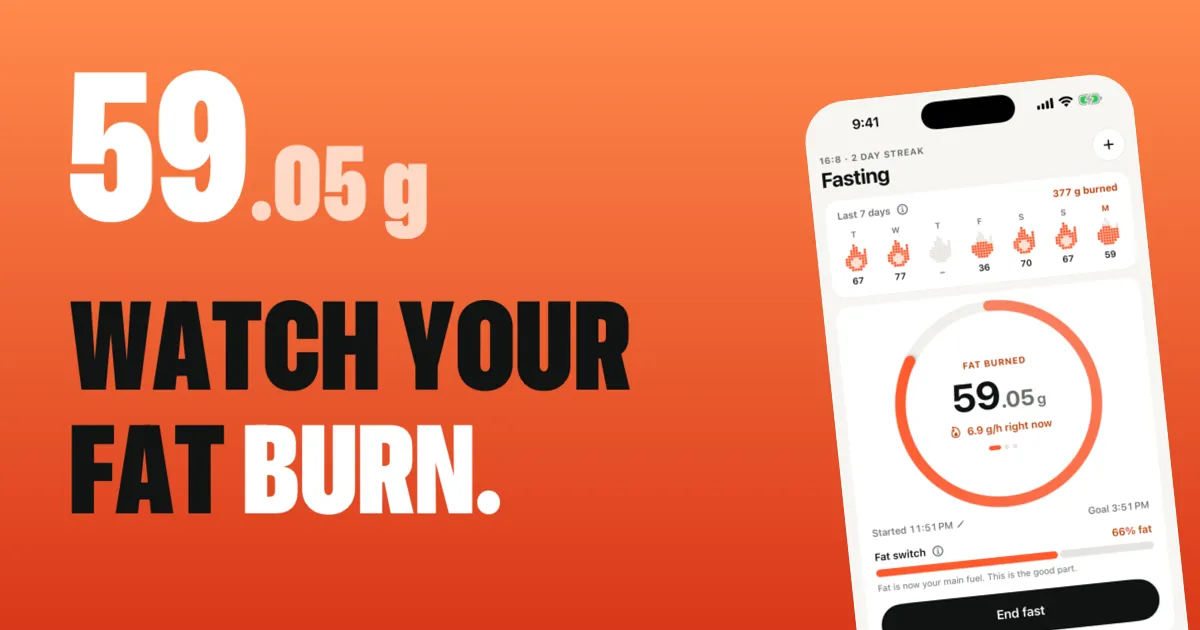
Sixteen hours is one of the most popular ways to fast. Finish dinner, skip breakfast, eat again at lunch: that’s 16:8, and for most people it fits a normal week without much planning.
But a timer only tells you how long it’s been. It doesn’t tell you what your body is doing, and the last few hours of a 16-hour fast look nothing like the first few.
The first 12 hours: running on your last meal
For the first four hours you’re still digesting. Blood sugar and insulin rise, and insulin tells your cells to use that sugar and store what’s left. About a third of your energy comes from fat here, the lowest share of the whole fast.
Then insulin drifts back down and your liver starts releasing its stored sugar, called glycogen, to keep your blood sugar steady. For most people this part happens overnight, while they sleep.
From 8 to 12 hours the glycogen store gets smaller every hour. Glucagon rises, insulin stays low, and your muscles lean more and more on fat.
Hour 12: the fat switch
At around 12 hours fat becomes your main fuel. Researchers call this the metabolic switch, and when it happens varies: sooner if you’ve been active, later after a big meal.1 Your liver also starts turning fatty acids into ketones, which your brain and muscles can burn.
The switch is more of a dimmer than a light switch. The share of energy from fat climbs steadily, and it climbs fastest between 8 and 16 hours.
| Hours since your last meal | Energy from fat | Stage |
|---|---|---|
| 0 | 32% | Digesting |
| 8 | 44% | Burning stored sugar |
| 12 | 59% | Fat switch |
| 16 | 74% | Fat-adapted |
| 24 | 86% | Deep fat-burn |
Hour 16: three quarters fat
By hour 16, about three quarters of your energy comes from fat, and the share keeps creeping up. Ketones keep rising. A 16:8 fast ends right as this phase begins, which is why its last hours do so much of the work:
- The fat share is at its highest. Every hour burns more fat than the hour before it.
- You’re usually awake. You burn more energy moving around than sleeping, so the same share means more grams.
- A walk goes further. Activity late in a fast draws more on fat than the same walk right after a meal.
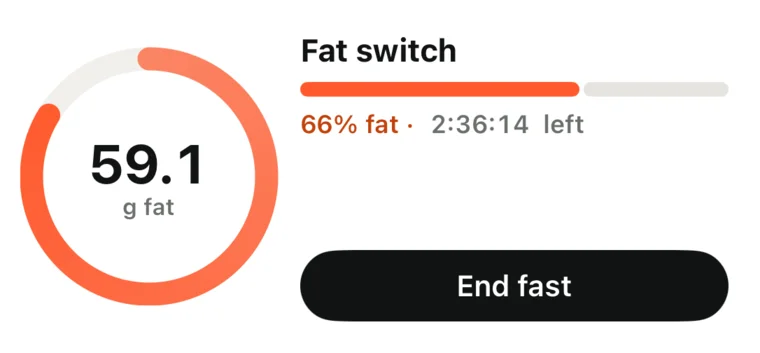
The widget keeps the grams on your home screen, so you see the last hours count up.
After an evening meal, the last 4 hours of a 16:8 fast usually burn more fat than the first 8 put together.
How it can feel
Hour 16 is steadier than most people expect. The hunger you felt around your usual breakfast time tends to fade.
- Hunger comes in waves and usually passes within 15 to 20 minutes.
- Water, black coffee and plain tea help, and they don’t break the fast.
- Some people feel clear-headed; others feel low on energy. Both are normal.
Should you go longer?
You can, but you don’t have to. Longer fasts burn more fat per hour, and past 24 hours fat supplies most of your energy.2 But 16:8 is well studied and easy to repeat, and the plan you keep up beats the plan you abandon.
If you’re pregnant or breastfeeding, under 18, have had an eating disorder, or have diabetes or another condition, talk to a doctor before fasting.
Footnotes
-
Anton SD et al., “Flipping the Metabolic Switch: Understanding and Applying the Health Benefits of Fasting”, Obesity (2018). https://doi.org/10.1002/oby.22065 ↩
-
The percentages here come from the Unpause model of the fuel shift, the one researchers measure with breathing tests (the respiratory quotient). ↩